
Manufacturing Guided by Your Textile Requirements
Every yarn project starts with its intended use. Material, structure, color and processing decisions are guided by the requirements of the finished textile product.
The Application Gives Every Processing Decision a Purpose
A yarn specification becomes more useful when it is connected to the fabric, process and finished product it needs to support. The starting point is a clear understanding of the application and the requirements that matter to you.
Begin with the intended use and the problem to solve. Translate that brief into requirements to discuss and confirm, then select a suitable yarn direction and processing route. Sample feedback helps refine the proposal; the agreed specification and acceptance requirements provide the basis for subsequent production.
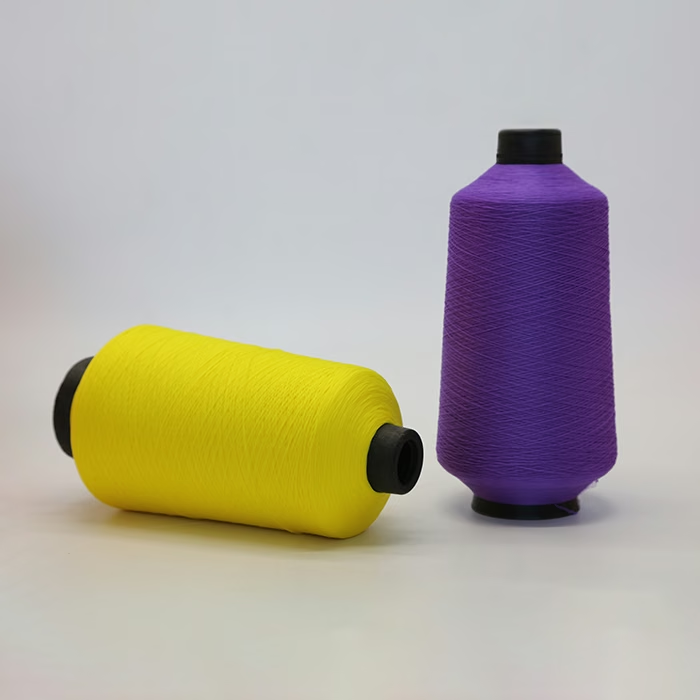
Yarn cones from FENGDA’s existing product photography.
Start with the End Use
You can start with a reference sample or a processing problem. A complete yarn specification is helpful, but it is not a prerequisite for the first discussion.
Describe the Product and Process
- Finished textile product, intended use and where the yarn will be used.
- Fabric construction and downstream processing, such as knitting, weaving or finishing.
- Current yarn specification or a yarn, fabric or garment reference.
Explain the Change You Need
- The issue you want to address and what should remain unchanged.
- Color, handle, stretch, recovery or other priorities for the finished textile.
- How the proposed yarn will be trialed and the results you will compare.
The same yarn can behave differently in different fabric constructions. Include the relevant machine and processing conditions when they are known.
Turn Requirements into Yarn Specifications
Use the application brief to distinguish an intended result from the yarn details and evaluation conditions needed to assess it.
| Customer Requirement | What Needs to Be Clarified |
|---|---|
| Softness & Handle | Material, filament or yarn structure, a reference sample and the conditions for evaluating the resulting fabric. |
| Stretch & Recovery | The yarn’s position in the product, fabric construction, target behavior and a mutually agreed evaluation method. |
| Color & Appearance | A physical color standard or reference, the proposed coloration route, and viewing and approval conditions. |
| Durability | Intended use and care, the specific wear or failure mode of concern, and applicable evaluation requirements. |
| Processing Behavior | Customer equipment and process conditions, required package form, and observations from a downstream trial. |
This framework defines questions to agree on; it is not a list of in-house test capabilities. Final textile performance also depends on fabric construction and downstream processing.
Choose the Processing Route
FENGDA’s product range provides four directions for discussion. Hank dyed and dope dyed describe coloration; textured and covered describe structure or processing. They are not four consecutive steps for every yarn.
Confirm the proposed route and responsibility for each stage with FENGDA, including which operations are carried out in-house and which are supplied through partners. The appropriate arrangement depends on the yarn and the agreed project requirements.

Yarn paths and guide components in the FENGDA workshop.
Hank Dyed Yarn
Hank dyeing applies color to yarn arranged in loose hanks. Discuss the material and yarn specification, shade reference, color evaluation conditions and final package required for your process.
Dope Dyed Yarn
Dope dyeing introduces color during fiber production rather than dyeing the finished yarn. Discuss the material, available color direction, reference shade and downstream processing needs.
Textured Yarn
Texturing changes filament arrangement to influence bulk, handle and extension behavior. Clarify the material, required construction and the behavior to evaluate in your fabric; do not infer finished performance from the yarn name alone.
Covered Yarn
FENGDA’s listed air-covered yarn directions combine nylon or polyester with spandex through air interlacing. Discuss component specifications, the intended stretch application and feeding conditions. Air covering is distinct from mechanically wrapping a cover around a core.
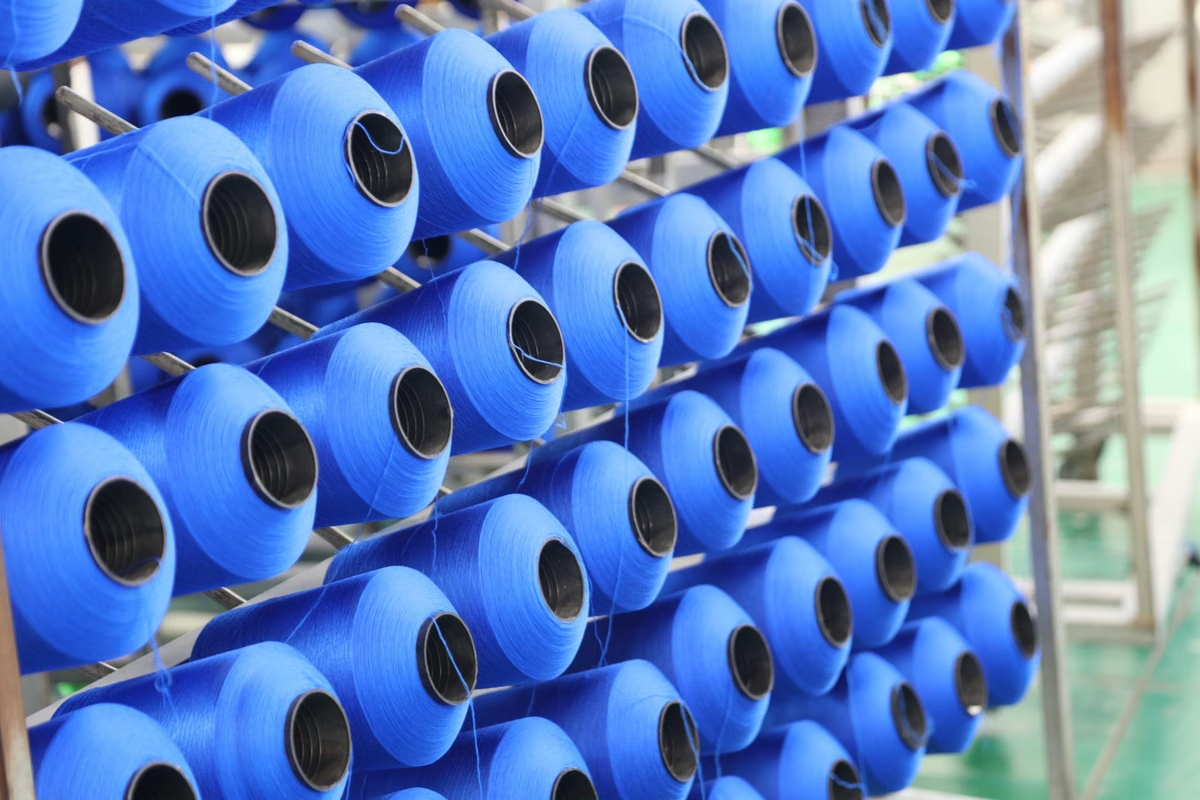
Blue yarn packages arranged on a rack in the FENGDA workshop.
Validate Through Samples
A useful sample evaluation answers a defined question. Agree whether the sample is for a color or handle review, a processing trial, or comparison with an existing yarn before deciding what to supply and assess.
- Identify the reference specification and the sample being evaluated.
- Set out the color, appearance or handle requirements and the comparison conditions.
- Record the customer’s downstream processing conditions and trial observations.
- Discuss any changes needed and what should be evaluated again.
- Agree which sample, specification and evaluation results form the confirmation basis.
A promising yarn sample does not by itself confirm the performance of the finished product. Evaluate the proposed yarn in the intended fabric and downstream process. Sample quantity, package, cost and timing should be agreed for the particular request.
Agree on Production and Delivery Requirements
After sample evaluation, make the basis for subsequent orders explicit. The aim is to carry the agreed requirements forward, so a repeat order is not based only on a product name or an informal reference.
Define the Agreed Reference
- Final yarn specification and the sample or revision it refers to.
- Color reference, appearance requirements and agreed comparison conditions.
- Any approved changes following customer trials.
Define What Will Be Delivered
- Required package form, label information and identification needs.
- Agreed acceptance requirements, checks and any records needed for the order.
- How changes or differences should be discussed before acceptance.
Raise any material or batch identification needs at the quotation stage. Agree on the relevant records and checks for the order rather than assuming that every product uses the same control plan.
Inside the FENGDA Workshop

Connect the Equipment with the Yarn Requirement
The mounted yarn packages and processing positions shown here relate to yarn handling within the workshop. For a particular project, discuss the required structure and package alongside the proposed processing arrangement.
Explore the workshop photographs for further visual context, then confirm the operations relevant to your specification.
Start with Your Application and Requirements
Share your finished product, reference sample or current yarn specification. Tell us what you want to achieve and any issues you need to address.
Use the Yarn Development Tool to organize your brief, or contact us directly using the form below.